Therapy Dog Training on Long Island, NY
Your dog loves people, and you’d love to share that with patients, students or seniors. First your dog needs steady manners: calm greetings, gentle handling, a loose leash and no interest in dropped food. Our therapy dog training on Long Island prepares you and your dog for a therapy dog organization’s evaluation. Your first step is a free consultation, where Rikki hears about your dog, answers your questions and points you to the right program.
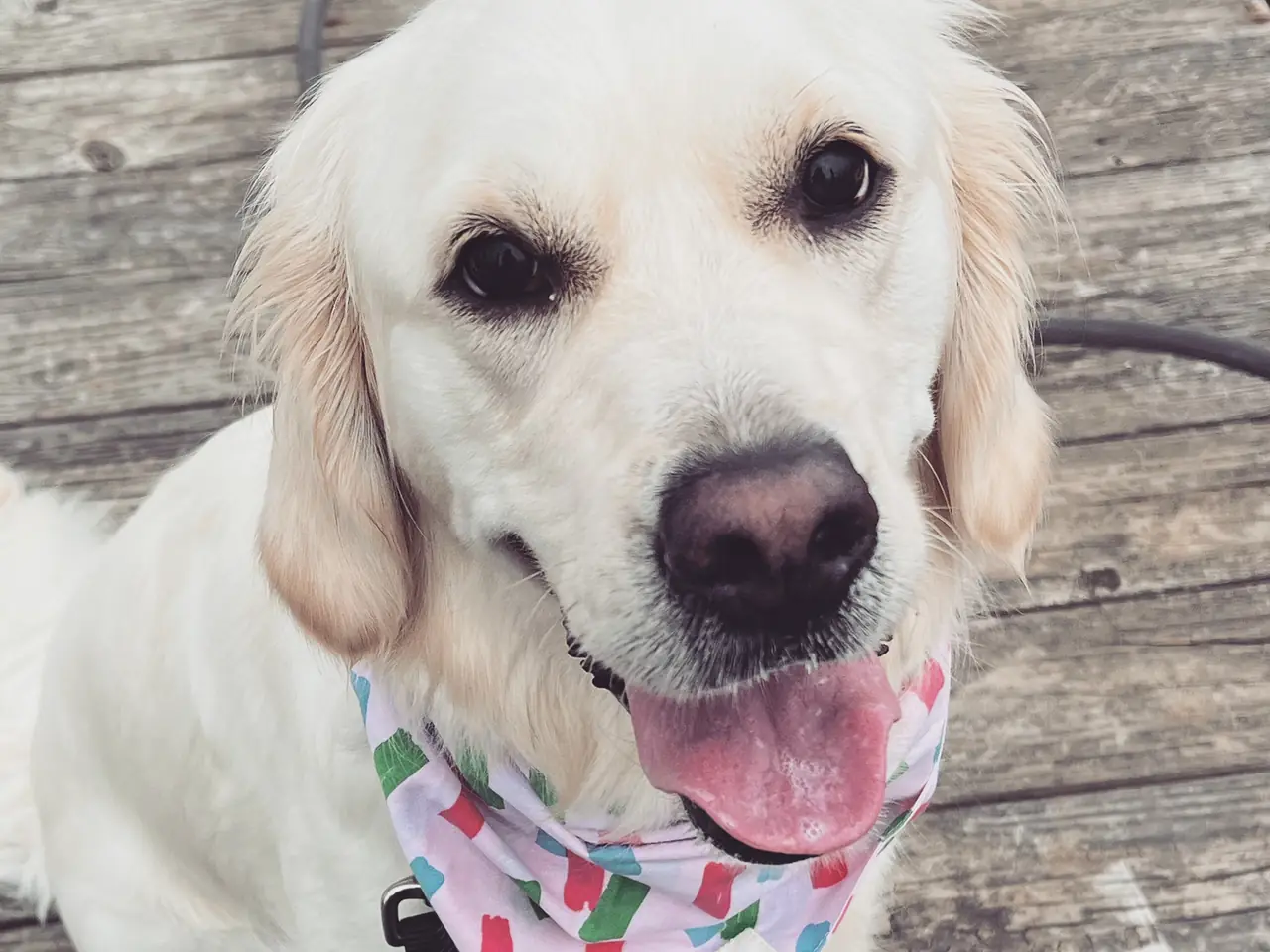
Check Out Our Reviews
Getting Your Dog Evaluation-Ready
Start with a free consultation
Tell Rikki about your dog and the kind of visits you’d like to make. She answers your questions, gets to know your dog’s personality and suggests a program shaped around the visits you have in mind.
Polish everyday obedience
A loose leash, sit, down, stay, place, leave it and a solid come are the backbone of any therapy dog evaluation. Rikki builds them until they hold up with people, noise and smells all around.
Practice gentle handling and new places
Therapy dogs get petted, hugged and handled by strangers, often in unfamiliar rooms. Your dog gets comfortable with touch on the ears, paws and tail, and with new floors, sounds and settings, so a visit feels easy instead of overwhelming.
Become a confident handler
Evaluators watch the whole team, so you learn too: how to read your dog’s body language, when to give your dog a break and how to keep a visit relaxed. When you both feel ready, you take the evaluation with the therapy dog organization you choose.
From Excited Greeter to Calm Visitor
These are the habits most friendly pets need to polish before a therapy dog evaluation.
Many friendly pets
- Jumps up to say hello to everyone
- Squirms away from hugs and handling
- Vacuums up anything dropped on the floor
- Pulls ahead down every hallway
- Spooks at wheelchairs or rolling carts
- Fixates on other dogs in the room
- Can’t settle in a new place
A visit-ready dog
- Greets people calmly, paws on the floor
- Relaxed when strangers pet and touch
- Leaves dropped food and pills alone
- Walks on a loose leash through crowds
- Takes walkers and wheelchairs in stride
- Stays neutral when another dog passes
- Lies down and relaxes on cue
What a Therapy Dog Evaluation Looks For
Therapy dog organizations evaluate each dog and handler as a team before inviting them to visit. Every organization sets its own test, but most recreate real visiting situations: a stranger walking up, someone petting and gently handling your dog, a crowd to walk through, a loud clatter, another dog nearby and food dropped on the floor.
The dogs who do well stay calm, take surprises in stride and look to their handler for guidance. Ruff Haus K9 prepares you and your dog for that day. We don’t certify or register therapy dogs; the organization you join runs the evaluation and everything after it.
Check the requirements of the group you plan to join, such as minimum age and health records, so your training lines up with their test.
- Friendly, polite greetings with strangers
- Sitting calmly while being petted and brushed
- A loose-leash walk through a crowd of people
- Staying steady through a sudden loud noise
- Ignoring food dropped right in front of them
- A calm, neutral reaction to another dog
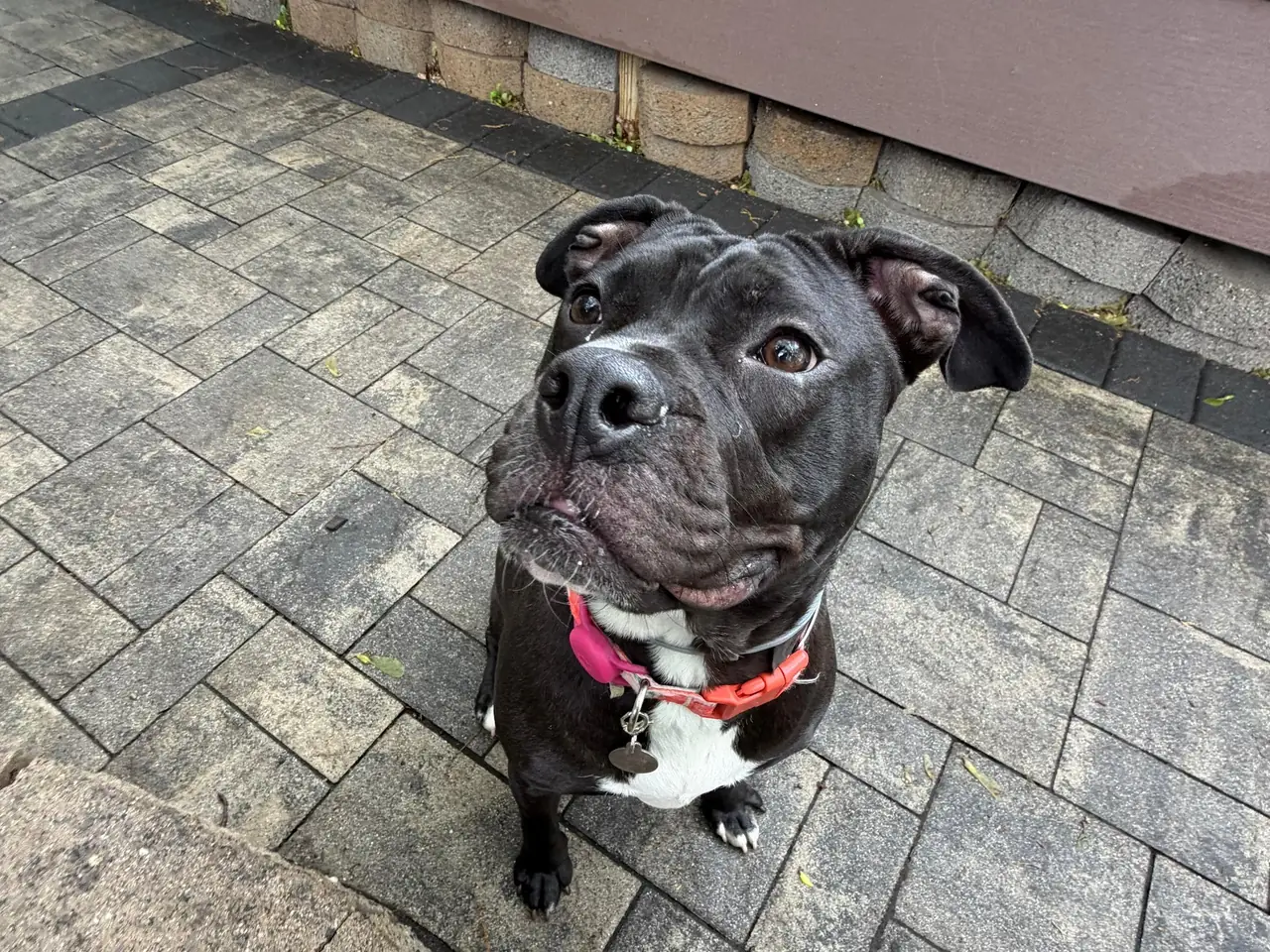
Visits That Make Someone’s Day
Therapy dog work is usually volunteer work, done as a team with your own dog. Each setting asks something a little different of your dog, and good preparation covers all of it.
Hospitals and rehab centers
A gentle dog at the bedside can brighten the day for a patient or a worried family. Your dog needs to stay relaxed around beeping monitors, IV poles and polished floors.
Senior living communities
Residents who miss their own pets often light up when a dog walks in. Walkers, canes and slow, unsteady hands should not bother your dog in the least.
Schools and reading programs
Kids who get nervous reading aloud tend to relax when the listener has four paws. Your dog has to stay settled while small hands pat and the room gets noisy.
Colleges and community events
Exam weeks and support events bring long lines of people who just want a few minutes with one calm dog. New faces, crowds and dropped snacks come with the job.
Therapy Dog vs. Service Dog
The two names get mixed up all the time, but the jobs are very different.
A therapy dog comforts other people. With its handler, it visits hospitals, schools, nursing homes and other facilities by invitation. Therapy dogs don’t have special public access rights; they go where they are welcomed.
A service dog works for one person. Under the ADA, it is individually trained to do work or perform tasks for a person with a disability, which is why it can go most places the public goes. If that’s what you need, Ruff Haus K9 offers service dog training as well.
An emotional support animal comforts its owner through companionship rather than trained tasks. It isn’t a therapy dog or a service dog.
Our therapy dog training on Long Island focuses on one goal: a friendly dog who stays calm, gentle and trustworthy with anyone it meets, and a handler who knows how to look out for it.
Is Your Dog Cut Out for Therapy Work?
Training can sharpen manners, but the love of people has to be there already. Good candidates go looking for attention, then settle happily once they’ve had it. They forgive clumsy petting, shake off surprises quickly and stay comfortable in places they’ve never seen.
Size and breed don’t decide it; temperament does. Rikki evaluates every dog before recommending a program and will give you her honest read, including if your dog would be happier as a much-loved companion at home.
Younger dogs can start building the foundation early. Ruff Haus K9 training programs start at 5 months, and many therapy dog organizations set their own minimum age for evaluation.
Curious whether your dog has what it takes? Hit the button below and fill in a short form to book your free consultation. Rikki will hear about your dog, take your questions and suggest a program that matches what you hope to do.
- Seeks out people, then settles once greeted
- Shakes off loud noises and surprises fast
- Enjoys being touched on the ears, paws and tail
- Relaxes in a new room within a few minutes
- Stays polite when other dogs are around
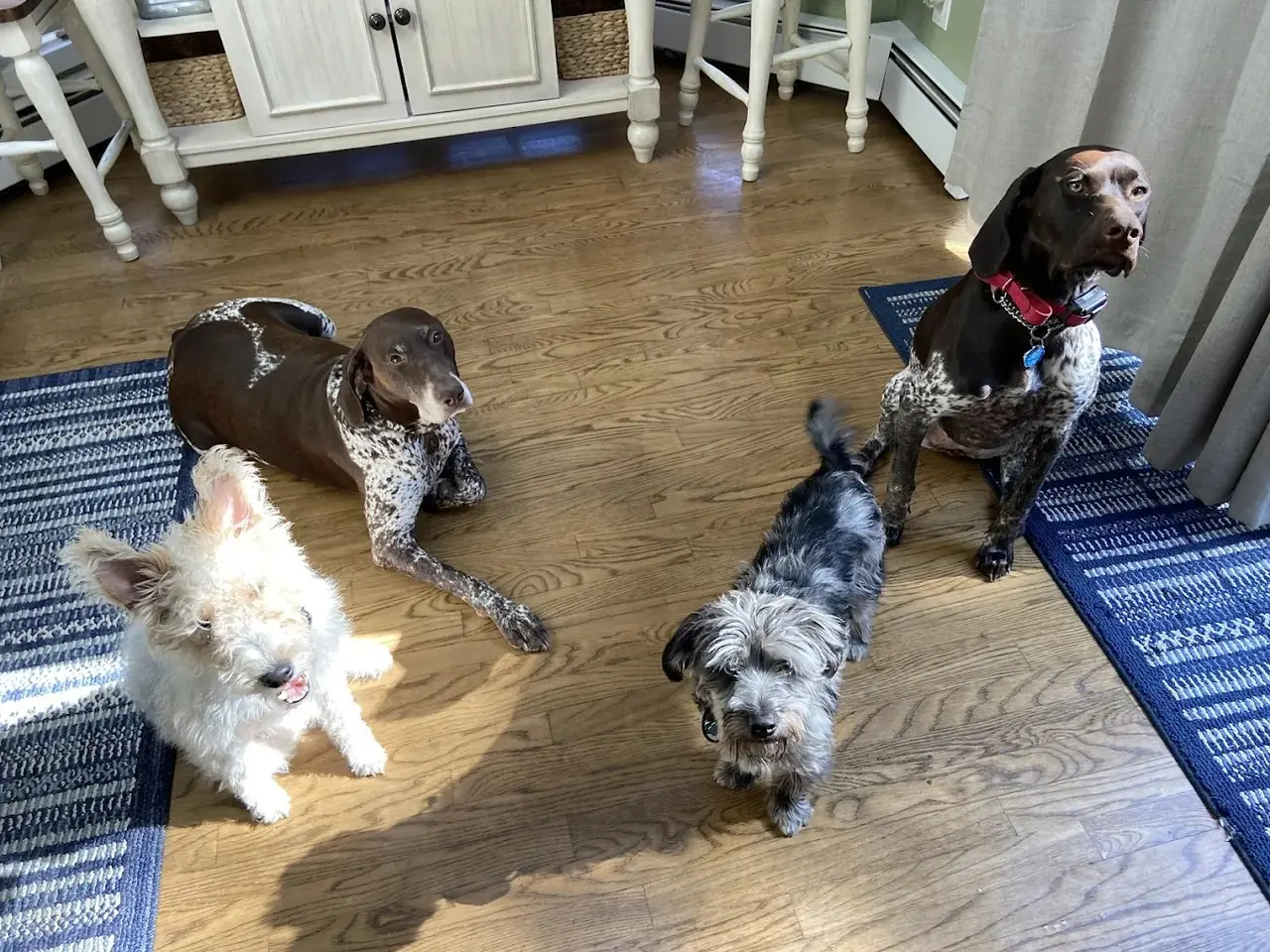
Calm Manners, Built One Dog at a Time
Ruff Haus K9 is based in Kings Park and trains dogs from across Long Island, including St. James, Smithtown, Huntington, Islip and Brookhaven. Rikki Fontana, the owner and head trainer, trained at Animal Behavior College in obedience and behavior modification.
She blends exercise, affection and positive reinforcement with e-collar training, fitted to how energetic, expressive and touch-sensitive your dog is. For a dog headed into hospitals and classrooms, that individual attention matters: a soft, sensitive dog and a bouncy, outgoing one need very different handling.
Your dog can stay and train with the Ruff Haus K9 family on a board and train program, with outings to parks and busy stores, or you can learn side by side with your dog through private lessons at home. Rikki will suggest the better fit.
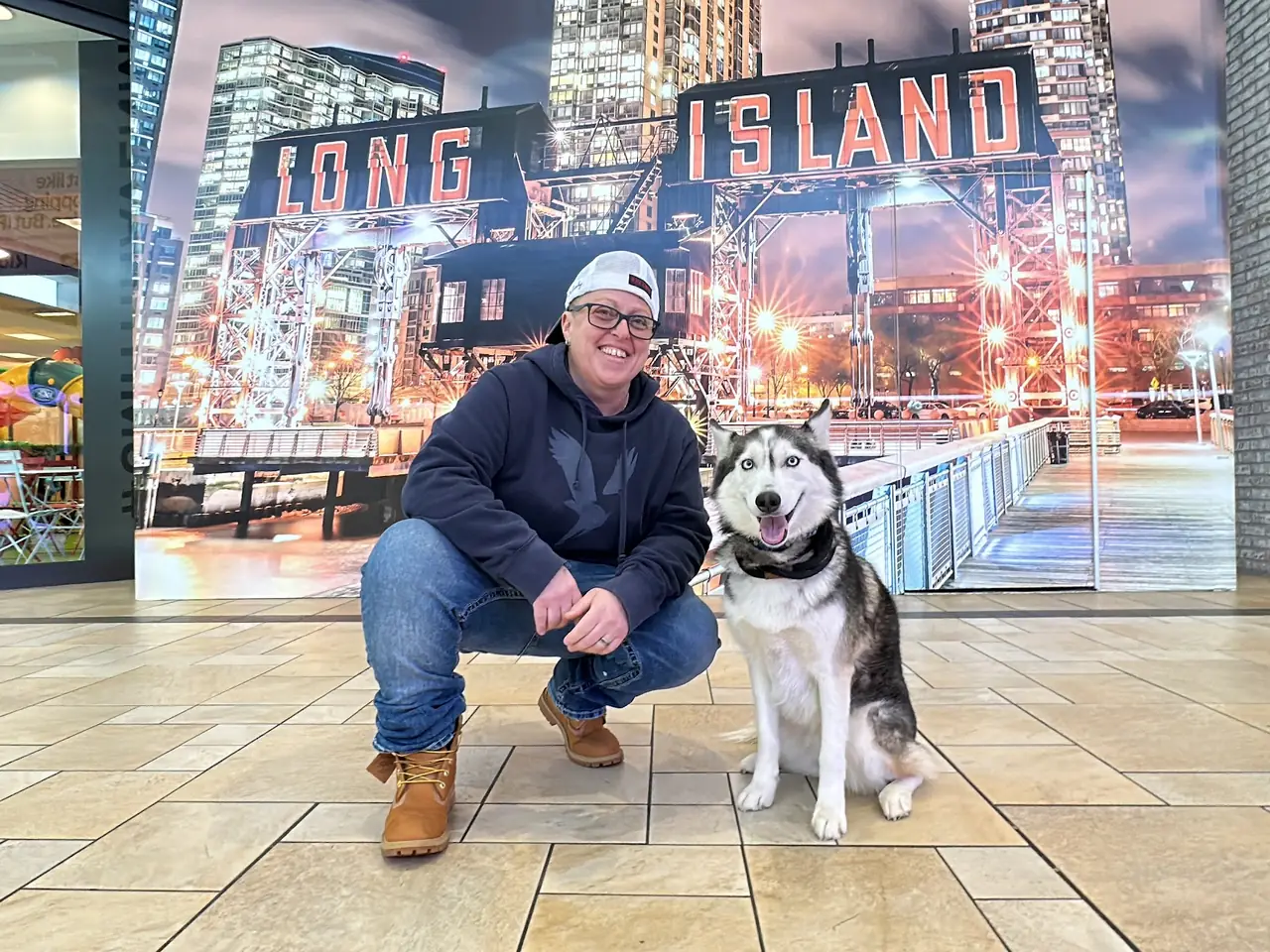
Therapy Dog Training Questions
How much does therapy dog training cost on Long Island?
It depends on your dog, the program and how much polishing your dog’s manners need. Every program is customized, so two dogs preparing for the same evaluation can need very different amounts of work. After learning about your dog on the free consultation, Rikki walks you through the choices and gives you a firm quote.
How do I get my dog ready to be a therapy dog?
Start with a dog who enjoys people, build reliable obedience, then practice in new places with plenty of strangers and distractions. Once your dog’s manners hold up everywhere, choose a therapy dog organization, check its requirements and schedule its evaluation. Ruff Haus K9 helps you with everything up to that point.
Who evaluates and approves therapy dogs?
Therapy dog organizations do. They test the dog and handler together and, if the team passes, welcome you as volunteers for their visits. Ruff Haus K9 doesn’t certify or register therapy dogs. We prepare you and your dog to walk into that evaluation ready.
What is K-9 dog training?
K-9 is a play on the word canine, so K-9 training simply means dog training. The term is often linked with professional working dogs, but plenty of trainers use it too, including Ruff Haus K9. Our programs cover obedience, manners and behavior for family dogs, including preparation for therapy work.
Can any dog become a therapy dog?
Not every dog, and that’s okay. Training builds manners and confidence, but a therapy dog also needs to truly enjoy meeting strangers and being handled. Rikki will tell you honestly what she sees in your dog on your consultation.
How long does therapy dog training take?
It depends on your dog’s age, temperament and starting manners, and on how often you practice together at home. Rikki won’t guess at a timeline before meeting your dog, but she will tell you what she sees and which program makes sense.
Can a therapy dog go into stores and restaurants?
Not as a therapy dog. Therapy dogs don’t have the public access rights that service dogs have under the ADA. They visit the facilities that invite them, and everywhere else the usual pet rules apply.
Explore Other Programs
Service Dog Training
Obedience, focus and calm public manners: training for the work your dog will do with you.
In-Home Training
Private one-on-one lessons at your home, where you learn to handle your dog right where the problems happen.
Puppy Training
House manners, leash skills and good habits for your puppy, through puppy board and train or in-home lessons.
Get Started Today
Claim your free consultation for therapy dog training on Long Island. Rikki will learn about your dog, answer your questions and recommend a program built around your goals.